Continental · 1844–1900
Friedrich Nietzsche
German philologist who diagnosed the death of God
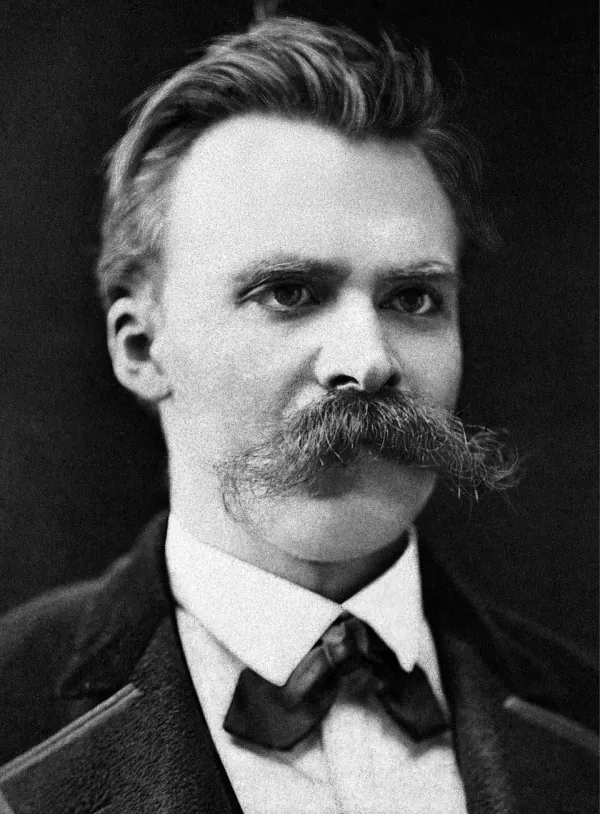
Nietzsche argued that once belief in God collapses, the values built on it lose their ground; he traced morality’s origins to resentment and the will to power, and called for a revaluation of values that affirms life.
Life and thought
Friedrich Nietzsche (1844–1900), a Lutheran pastor’s son, became professor of classical philology at Basel at only 24. Ill health forced him to resign in 1879, and for a decade he moved between Swiss and Italian resorts, writing book after book that sold few copies. He collapsed mentally in Turin in January 1889 and never recovered; his sister later edited his notes and steered his reputation towards the German nationalism and antisemitism he had despised.
Nietzsche asked what follows once “God is dead”, that is, once belief in God can no longer ground European values. In On the Genealogy of Morality he argued that Christian morality grew from the resentment of the weak, who renamed the strong “evil” and their own weakness “good”. He saw life as will to power, imagined the Übermensch as one who creates values, and offered eternal recurrence as a test: could you will your life again, exactly as it was? Existentialists, Heidegger, Foucault and Deleuze all read him closely.