Analytic & pragmatist · 1842–1910
William James
Psychologist and philosopher who made pragmatism famous
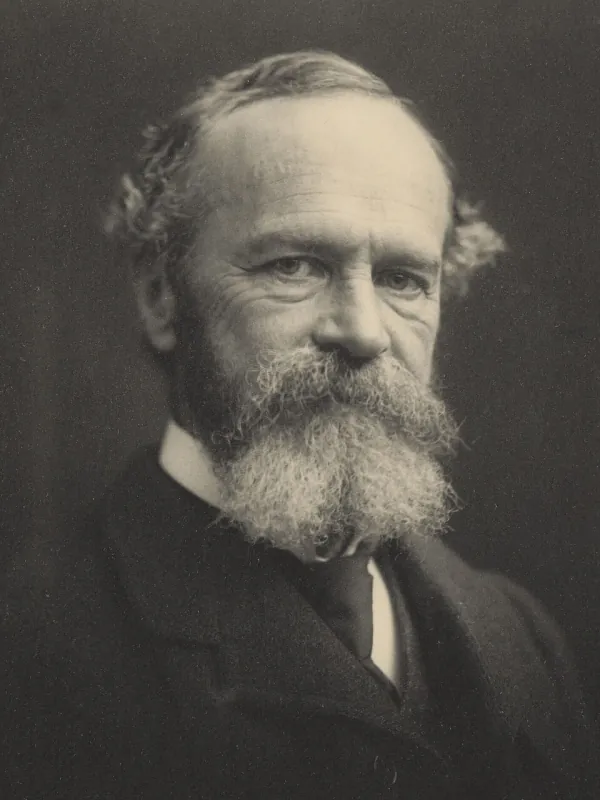
Truth is what works in the long run of experience, and we may sometimes have the right to believe ahead of the evidence; consciousness is a flowing “stream”, not a chain of separate ideas.
Life and thought
William James (1842–1910), elder brother of the novelist Henry James, tried painting, then medicine, taking a Harvard MD in 1869 after a long depression. He began teaching physiology at Harvard, set up one of the first American laboratories of experimental psychology, and spent twelve years writing The Principles of Psychology (1890), which made him the leading American psychologist before he turned fully to philosophy.
In Pragmatism (1907) James argued that the meaning and truth of an idea lie in the difference it makes to experience: true ideas are those we can assimilate, validate and verify, the ones that “work” in the long run. In “The Will to Believe” (1896) he defended the right to adopt a belief, such as religious faith, when the choice is live, forced and momentous and evidence cannot settle it. His “radical empiricism” held that relations between things are experienced as directly as the things themselves. Russell and others accused him of making truth whatever is convenient; his pragmatism nevertheless shaped Dewey and, later, Putnam and Rorty.