China & East Asia · c. 372–289 BCE
Mencius
Confucian who argued that human nature is good
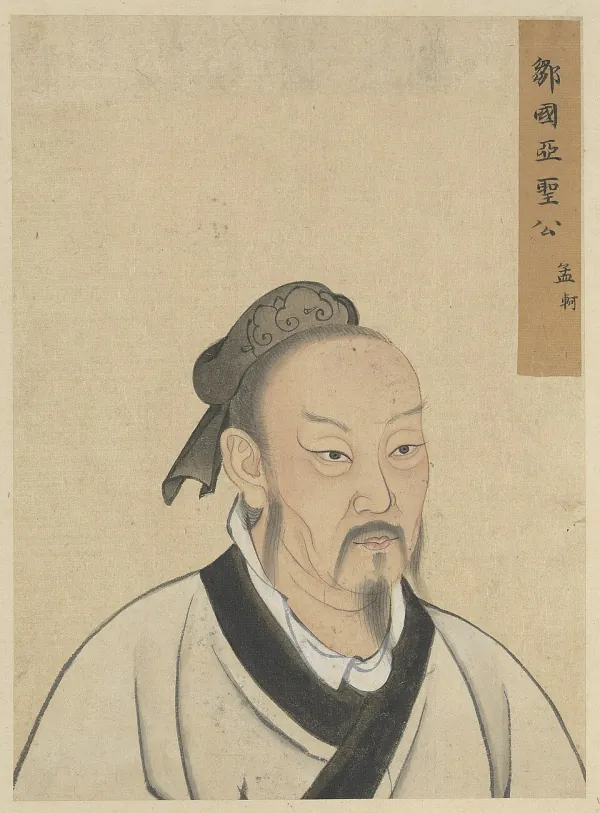
Everyone has four “sprouts” of benevolence, righteousness, propriety and wisdom, shown by the alarm anyone feels on seeing a child about to fall into a well; cultivation makes them grow. A ruler who oppresses the people loses Heaven’s mandate.
Life and thought
Meng Ke was born around 372 BCE in Zou, a small state next to Confucius’s Lu. Sima Qian says he studied with disciples of Confucius’s grandson Zisi. Like Confucius he travelled from court to court, debating with King Hui of Liang and King Xuan of Qi, and like Confucius he found no ruler willing to adopt his programme. The book that bears his name records these conversations and his debates with rival thinkers.
His central claim is that human nature is good. Anyone who suddenly sees a child about to fall into a well feels alarm and compassion, not to win the parents’ favour or praise, but spontaneously. Such feelings are four “sprouts” of humaneness, rightness, propriety and wisdom; like sprouts they need care, and they wither when neglected, as the hills near the city were stripped bare. Politically he put the people first and the ruler last: a tyrant has forfeited Heaven’s mandate, and killing one is not regicide. Zhu Xi made the Mencius one of the Four Books, and he is honoured as the “Second Sage”.