Greece & Rome · 341–270 BCE
Epicurus
Founder of the Garden, a philosophical community near Athens
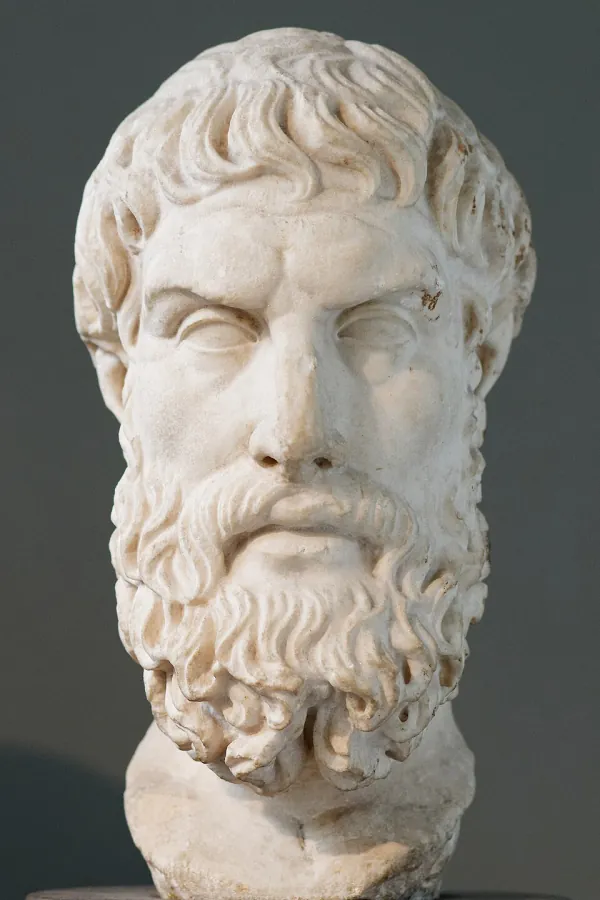
Taught that the good life is tranquil pleasure, reached by understanding that the world is atoms and void, that the gods do not punish, and that death is nothing to us. He valued friendship and simple food over fame and luxury.
Life and thought
Epicurus was born in 341 BCE to Athenian settlers on Samos. As a young man he studied with Nausiphanes, a Democritean, though he later insisted he was self-taught. After teaching in Mytilene and Lampsacus he moved to Athens around 306 and bought a house and garden that gave his school its name. The Garden admitted women and slaves, lived simply and honoured him almost as a saviour. Of his many books, three letters and the Principal Doctrines survive through Diogenes Laertius, with more sayings in a Vatican manuscript.
His aim was peace of mind. We fear the gods and death, he argued, because we misunderstand the world. In fact everything is atoms and void; the gods exist but are untroubled and do not punish; the soul is made of atoms and disperses at death, so “death is nothing to us”: where death is, we are not. Pleasure is the good, but the best pleasure is quiet, the absence of pain in the body and trouble in the soul, which simple food, friendship and reflection secure.