China & East Asia · c. 369–286 BCE
Zhuangzi
Daoist writer of parables, paradoxes and freedom
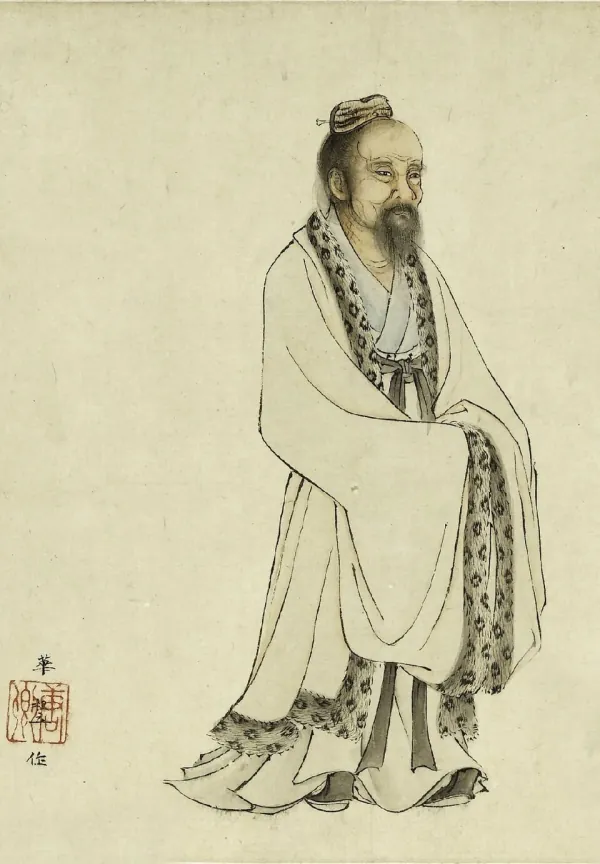
Through stories such as the butterfly dream and Cook Ding carving an ox, he showed that every perspective is partial and that freedom comes from “free and easy wandering” with change rather than clinging to fixed views.
Life and thought
Zhuang Zhou came from Meng in the state of Song and flourished in the late 4th century BCE. Sima Qian says he was once a minor official in a lacquer grove and turned down an offer to become chancellor of Chu, preferring, in a story the Zhuangzi tells, to be a tortoise dragging its tail in the mud rather than a sacred shell kept in a temple. Of the 33 chapters edited by Guo Xiang, only the seven Inner Chapters are usually linked to Zhuangzi himself.
His writing works by stories and paradoxes rather than argument. Every viewpoint, he suggests, makes its own “this” and “that”: the debaters of his day each called right what the other called wrong, and no neutral judge is available. He dreams he is a butterfly and wakes unsure which is dreaming. Cook Ding carves an ox for nineteen years without dulling his blade because he follows its natural joints. Freedom lies in moving with change, even death, instead of clinging to fixed views. His book shaped Chan Buddhism, Chinese poetry and painting, and every later Daoist.