China & East Asia · 1472–1529
Wang Yangming
Ming official, general and master of the School of Mind
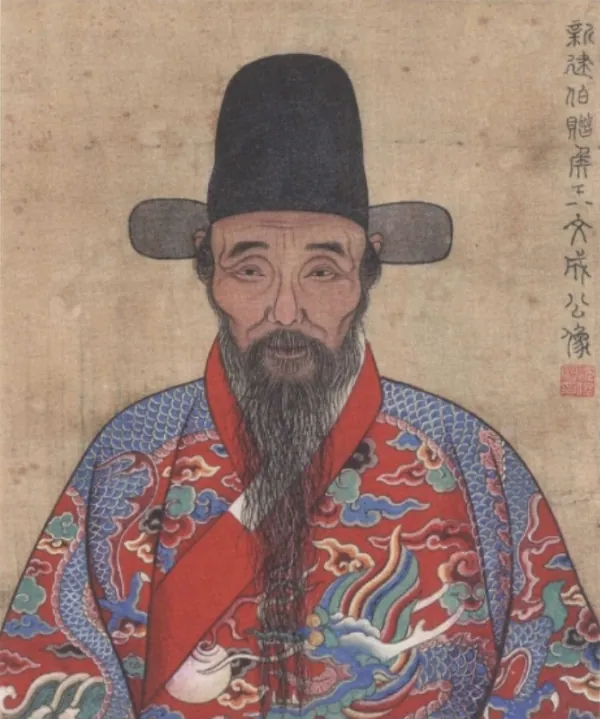
Principle is in the mind; everyone has innate good knowing (liangzhi), and knowing and acting are one, so moral learning means extending that knowing in action.
Life and thought
Wang Shouren, called Yangming, was born in Zhejiang in 1472 and passed the highest examination in 1499. As a young man he tried Zhu Xi’s method literally, contemplating the bamboo in a courtyard for seven days to find its principle, and fell ill. In 1506 he angered the powerful eunuch Liu Jin, was flogged and banished to Longchang in the mountains of Guizhou; there, in 1508, he realised that his own nature was sufficient and that he had been seeking principle in the wrong place. He went on to suppress rebellions, capture the rebel Prince of Ning in 1519, and died in 1529 returning from a campaign.
Principle, he taught, is not in things but in the mind. Everyone has innate good knowing (liangzhi), the capacity to tell right from wrong, and knowing and acting are one: seeing a beautiful colour already belongs to knowing and liking it to acting, yet the liking is there the moment one sees. Someone who “knows” filial piety but does not practise it does not yet know it. Moral life means extending innate knowing in every situation. His school spread through Ming China and later Japan.