China & East Asia · 1130–1200
Zhu Xi
Great synthesiser of Song Neo-Confucianism
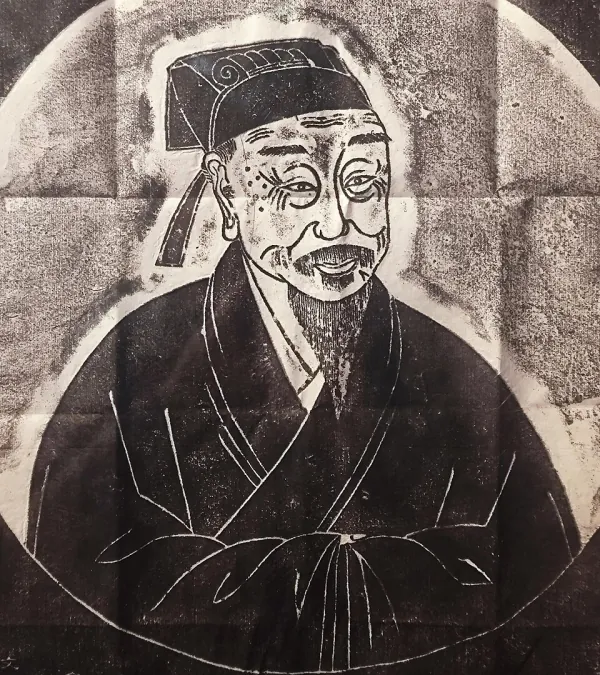
Systematised the theory of principle and qi and put the Four Books at the centre of learning; by investigating things patiently, one finally reaches a sudden, comprehensive understanding of principle.
Life and thought
Zhu Xi was born in 1130 in Fujian, passed the highest examination at eighteen, and found his direction under the teacher Li Tong. He preferred temple sinecures that left him time to teach and write, and rebuilt the White Deer Grotto Academy as a model school. His few years at court ended badly: in his last years his teaching was condemned as “false learning” and his followers purged, and he died in 1200 under that cloud. Within decades he was honoured, and from the 14th century until 1905 his commentaries on the Four Books were the basis of the civil service examinations.
Everything, he taught, is made of principle (li), what makes a thing what it is and how it ought to be, and qi, the vital stuff that gives it form and can be clear or turbid. Human nature is principle and therefore good; wrongdoing comes from turbid qi and selfish desire. The remedy is to “investigate things and extend knowledge”, studying the classics, history and the world while holding the mind in reverence, until one day understanding becomes comprehensive. His synthesis became orthodoxy in China, Korea, Japan and Vietnam.