Continental · 1813–1855
Søren Kierkegaard
Danish Christian thinker of the anxious, choosing individual
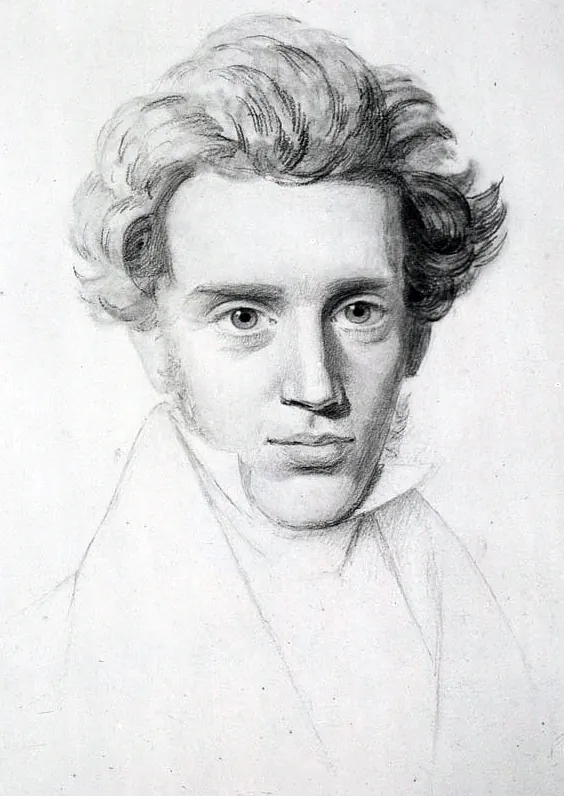
Against Hegel’s system, Kierkegaard insisted that truth is subjectivity: what matters is how a single person lives, and faith is a passionate leap that no reasoning can secure.
Life and thought
Søren Kierkegaard (1813–1855) spent almost his whole life in Copenhagen, living on an inheritance from his father, a wealthy merchant. After breaking off his engagement to Regine Olsen in 1841 he poured out books, many under pseudonyms such as “Johannes de silentio”, so that readers would meet different views of life without being told which was his. In his last years he attacked the Danish state church for turning Christianity into a comfortable convention.
Against Hegel’s system, which absorbed every individual into world history, Kierkegaard insisted that existence cannot be thought from outside. In Fear and Trembling he asks how Abraham could be willing to sacrifice Isaac: no universal ethics can justify it, so faith is a leap made in fear and trembling. He described the aesthetic, ethical and religious stages of life, and read anxiety and despair as signs of our freedom. Heidegger, Sartre and other existentialists took up these themes.