Analytic & pragmatist · 1889–1951
Ludwig Wittgenstein
Viennese-born Cambridge philosopher who overturned his own first philosophy
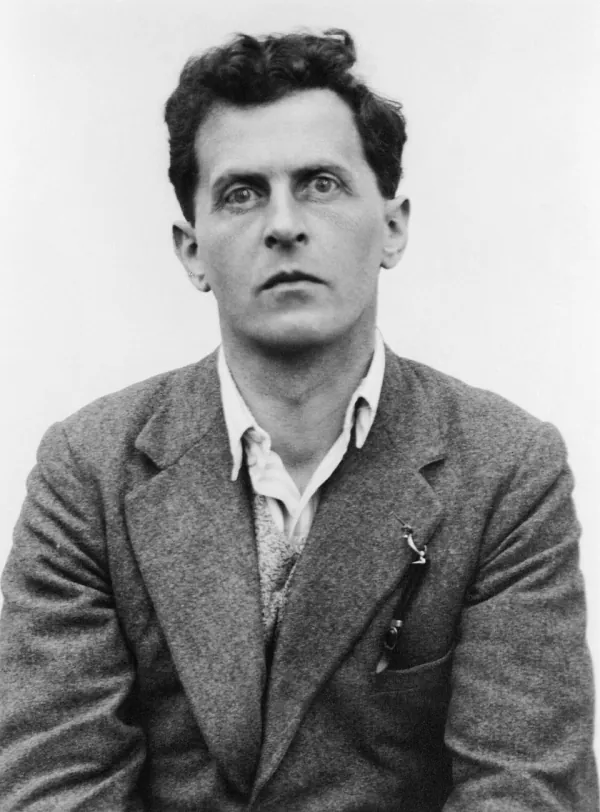
Early: a sentence pictures a possible fact, and what cannot be said must be passed over in silence. Late: meaning is use within “language-games” woven into forms of life, and philosophy is therapy for the bewitchment of our intelligence by language.
Life and thought
Ludwig Wittgenstein (1889–1951) was born into one of the richest families in Vienna and trained as an engineer before Frege sent him to Russell at Cambridge in 1911. He wrote the Tractatus Logico-Philosophicus during the First World War, partly as a soldier and prisoner of war; believing he had solved philosophy’s problems, he gave away his fortune and taught in Austrian village schools. He returned to Cambridge in 1929 and held its chair of philosophy from 1939 to 1947.
The Tractatus holds that a sentence is a picture of a possible fact; what cannot be pictured, including ethics and the meaning of life, cannot be said, only shown. His later work, published after his death as Philosophical Investigations (1953), rejects that picture. Words do not get their meaning by naming objects; they work like tools in “language-games” woven into human activities, and for most words the meaning is the use. Many philosophical problems arise when language “goes on holiday”; the task of philosophy is to show the fly the way out of the fly-bottle.