Early modern Europe · 1712–1778
Jean-Jacques Rousseau
Geneva-born writer who blamed society, not nature, for human corruption
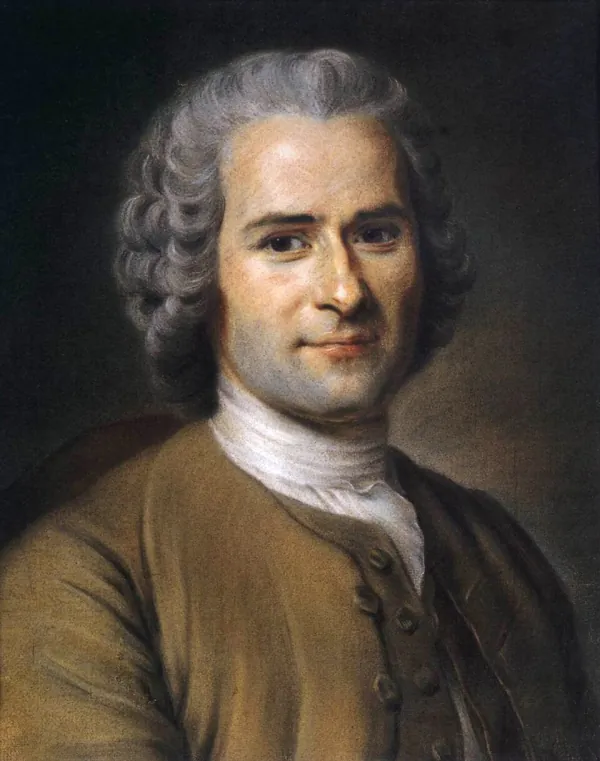
In the state of nature humans were not warlike but free and capable of pity; inequality grew with property and society. Legitimate authority comes from the “general will” of citizens who give the laws to themselves.
Life and thought
Jean-Jacques Rousseau was born in Geneva; his mother died days after his birth, and at fifteen he left the city to wander as an apprentice, servant, music copyist and protégé of Madame de Warens. In Paris he befriended Diderot, and in 1750 he won fame with a prize essay arguing that the arts and sciences had corrupted morals. The Social Contract and Emile (both 1762) were condemned in Paris and Geneva, and he spent years in flight, quarrelling with former friends.
Rousseau turned the contract tradition around. In the Discourse on Inequality, natural human beings are solitary and peaceable, moved by self-love and pity; vanity, dependence and inequality arrive with society and property — the first man who fenced off a piece of land and said “this is mine” began the trouble. The Social Contract asks how people can live under law and still be free: by each giving themselves to a community ruled by the general will, so that in obeying the law they obey themselves. His ideas fed the French Revolution, Kant’s ethics of autonomy and modern theories of education.