Early modern Europe · 1759–1797
Mary Wollstonecraft
English writer who argued that women are rational beings owed education
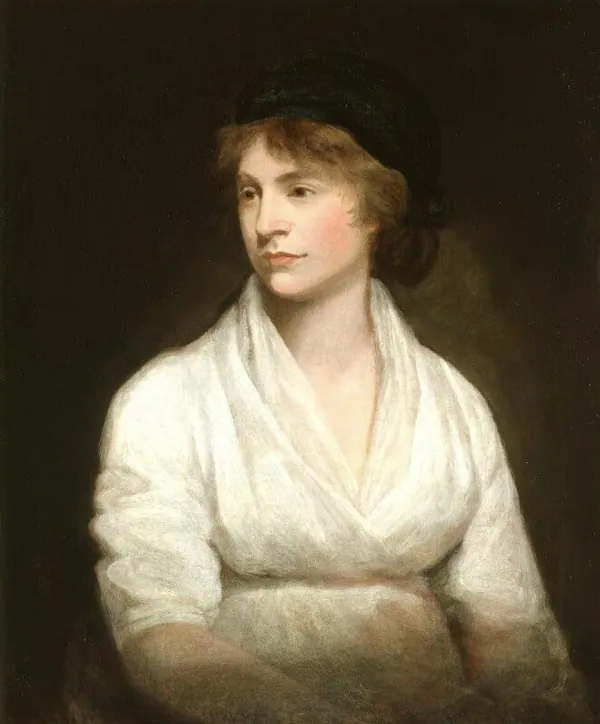
Women seem weak and frivolous not by nature but because they are denied education and treated as ornaments. If rights rest on reason, women share them, and society needs them as educated, independent citizens.
Life and thought
Mary Wollstonecraft grew up in a family impoverished by her father’s failures and violence. She ran a school at Newington Green, worked as a governess in Ireland, and then in London as a writer and reviewer for the radical publisher Joseph Johnson. Her reply to Edmund Burke’s attack on the French Revolution made her name in 1790, and two years later she published A Vindication of the Rights of Woman. She lived in revolutionary Paris, had a daughter with Gilbert Imlay, and later married the philosopher William Godwin; she died in 1797, days after giving birth to Mary, the future author of Frankenstein.
Her argument starts from the Enlightenment claim that rights rest on reason. If women are rational beings, they share those rights; if they seem weak, vain and frivolous, it is because they are educated only to please men, as Rousseau recommended in Emile. Give girls the same education as boys, she argued, and they would become virtuous companions, wise mothers and useful citizens able to support themselves. Long overshadowed by scandal about her private life, her book is now read as a founding text of feminism.