India · c. 480–400 BCE (debated; an older dating is c. 563–483 BCE)
The Buddha (Siddhārtha Gautama)
Founder of Buddhism, who taught a middle way out of suffering
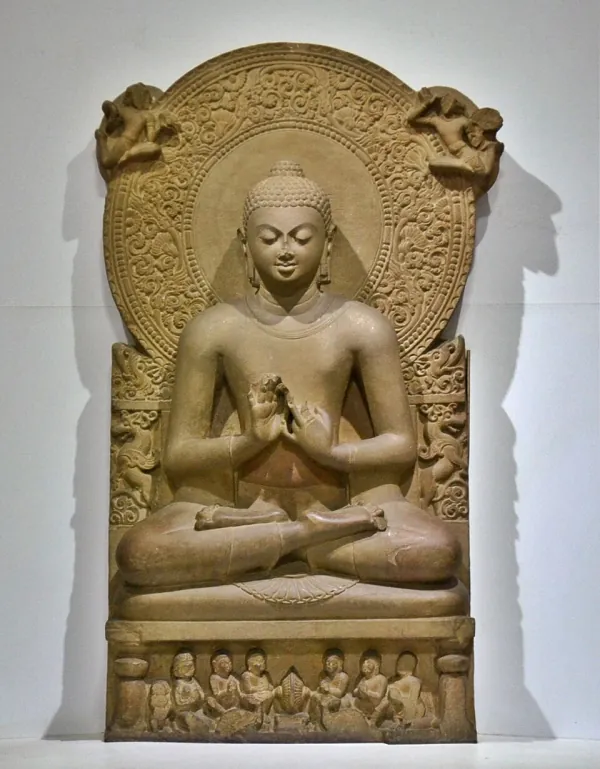
He wrote nothing; his disciples memorised his discourses. He taught that suffering comes from craving and from ignorance of impermanence and non-self, and that it can be ended through the Eightfold Path of ethics, meditation and wisdom.
Life and thought
Siddhārtha Gautama was born into the Śākya clan at Lumbinī, in today’s Nepal, and lived in the 5th century BCE (the exact dates are debated). According to the canonical accounts, he left a comfortable household at about twenty-nine, tried severe asceticism and rejected it, and at thirty-five, meditating at Bodh Gayā, reached awakening. He then taught for some forty-five years across the Ganges plain and founded an order of monks and nuns. He wrote nothing: his discourses were memorised and written down centuries later.
His teaching starts from a diagnosis. Life as we live it is unsatisfactory (duḥkha); its cause is craving, fed by ignorance; it can cease; and the Eightfold Path of ethics, meditation and wisdom leads there. The key insight is that nothing we cling to is permanent or a self: a person is a changing stream of body, feeling, perception, mental formations and consciousness. Seeing this cuts craving at the root. This “middle way” spread across Asia and later shaped Schopenhauer and Ambedkar.
Shaped
1788–1860Arthur SchopenhauerHe saw his doctrine of the will and its denial echoed in Buddhism and the Upanishads, which he read in translation.fl. 5th c. CEBuddhaghosaTheravāda commentator who systematised doctrine in Sri Lankac. 150–250NāgārjunaFounder of Madhyamaka, revered as a ‘second Buddha’1891–1956B. R. AmbedkarDalit leader, jurist and chief architect of India’s constitutionArgued against
fl. 6th–5th c. BCEAjita KesakambalīThe Buddhist canon presents Ajita’s denial of karmic fruit as a paradigm ‘wrong view’.traditionally 599–527 BCE (many scholars: c. 499–425 BCE)MahāvīraBuddhist suttas criticise the Jain leader Nigaṇṭha Nātaputta (Mahāvīra) for his emphasis on austerity to burn off past karma.Meanwhile, in other traditions
c. 490–430 BCEZeno of EleaParmenides’ pupil, famous for paradoxes of motion and pluralityc. 490–420 BCEProtagorasThe most famous sophist, who taught virtue for a feec. 483–375 BCEGorgiasSicilian master of rhetoric and envoy to Athens5th c. BCELeucippusFounder of atomism, about whom almost nothing is knownc. 470–391 BCEMoziFounder of Mohism and critic of Confucian partialityc. 470–385 BCEPhilolausPythagorean whose book first set out the school’s doctrinesOn the record
The Buddha lived c. 480–400 BCE; the traditional dating is 563–483 BCE.
The Stanford Encyclopedia notes that his dates were long put at about 560–480 BCE, but that many scholars now hold he died around 405 BCE. The 563–483 range is an older scholarly reckoning rather than a Buddhist tradition (the Theravāda reckoning is earlier still), so the atlas now calls it the older dating.